

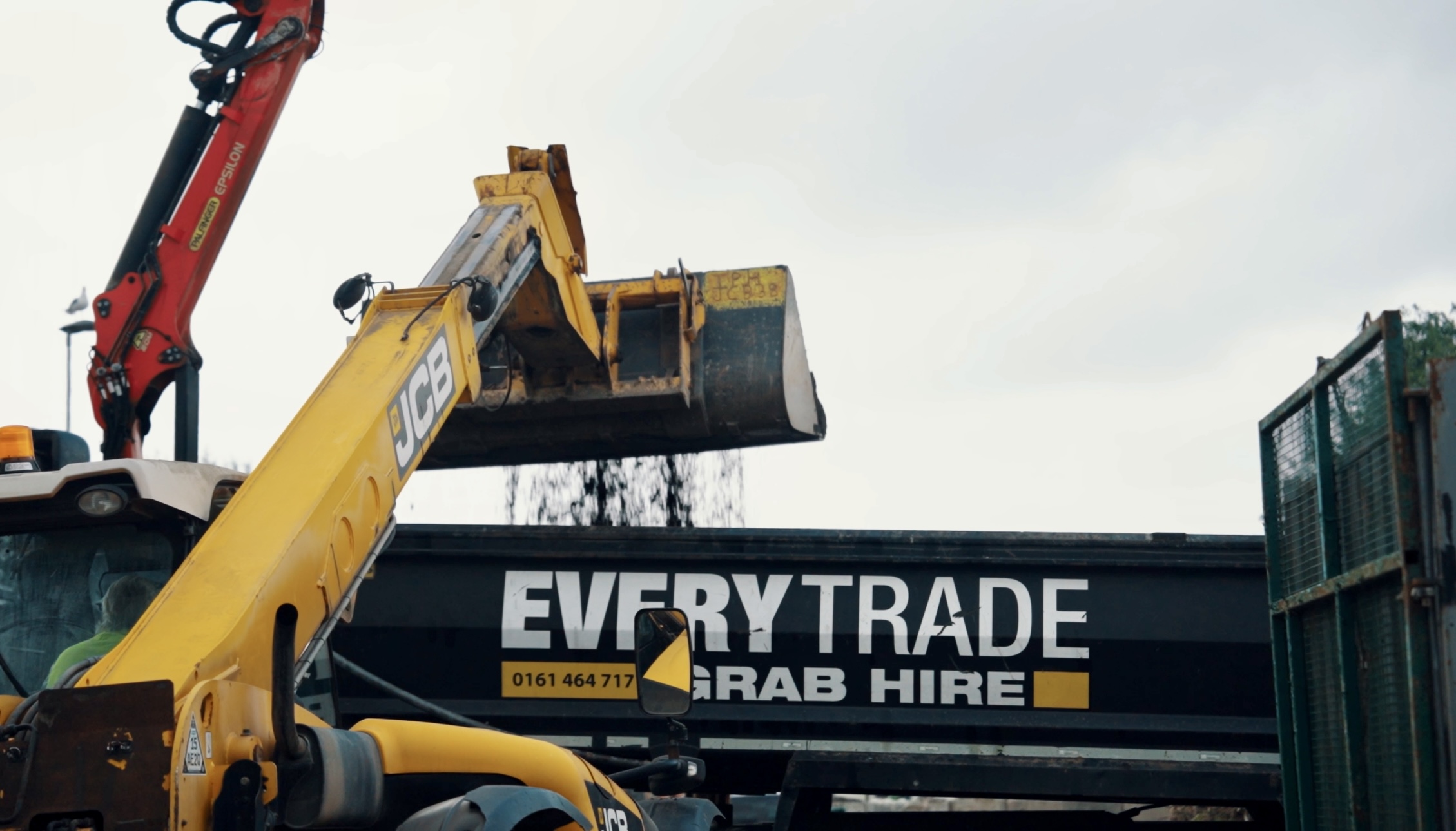
MOT Type 1 is a graded crushed stone used to build the load-bearing layer underneath driveways, patios, paths and roads. It contains everything from 40mm stone down to fine dust, and that spread of particle sizes is what lets it compact into a hard, stable base that will not move under load.
If you have ever seen a driveway that has sunk into ruts where the car wheels sit, you have seen what happens when the sub-base is wrong. The blocks or the tarmac on top get the blame, but the problem is nearly always underneath. Type 1 is the material that stops it happening.
We deliver Type 1 across Stockport, Manchester and Cheshire most days of the week, so this guide covers the questions we get asked on the phone: what it is, how it differs from the other materials on the price list, how deep it needs to go, and whether it lets water through.
MOT stands for Ministry of Transport. The department has been renamed several times since, and the material is now specified in Series 800 of the Specification for Highway Works, where it goes by the rather less catchy name of Type 1 unbound mixture.
In the trade, it has always been known as MOT Type 1 or just Type 1, and this is what everyone still calls it, which is why it’s still listed as this on our website.
A sub-base is a layer of crushed stone or aggregate that sits between the subgrade, which is natural ground you have dug down to, so tends to be soil, and the top surface, such as paving, tarmac or concrete. It aims to provide a stable foundation for the upper layers and ensures they don’t shift or crack.
Driveways and roads are built in layers, and the sub-base provides the structural work. It takes the weight of a car sitting on a small patch of block paving and spreads it out over a much wider area of ground, so the pressure reaching the soil is low enough that the soil can carry it without deforming. A 100mm layer of properly compacted Type 1 will spread a wheel load over roughly three times the area it started with.
This is why the sub-base is the part you cannot cheap out on. The surface is what you look at, but the sub-base is what holds the surface flat. Get the depth or the compaction wrong, and no amount of good block paving will save it.

MOT type 1 is made of crushed stone, which ranges in size from 40mm to a fine dust. It is usually made of hard quarried stone such as granite, limestone, basalt, gritstone or sandstone, or crushed concrete and crushed slag. It creates an easily compactable aggregate thanks to the different sizes of crushed stone. The 40mm stone gives it the strength; the medium sizes fill the gaps between the big pieces, and the dust fills the smaller gaps between those. Once rolled, it all compacts together.
Usually, you will see two versions on most aggregate price lists:
For a domestic driveway, patio or shed base, recycled Type 1 does the same job as primary at a lower price and with a much smaller carbon footprint, because the stone has already been quarried once. Primary is usually better suited to heavily trafficked commercial work, or where a specification or a warranty demands new aggregate. If you are not sure which your job calls for, call and ask us; we’re more than happy to provide guidance.
Choosing the right aggregate for your sub-base depends on several factors, including load need and drainage requirements. This is where most of the confusion happens, because these materials look broadly similar in the back of a lorry but behave very differently once they are down.
| Material | Size | Fines content | Once compacted | Typical use |
| MOT Type 1 | 0-40mm | Controlled | Dense, very low permeability | Driveways, patios, roads, trafficked areas |
| Type 2 | 0-75mm | Higher | Dense but less predictable | Lighter duty, paths, temporary access, general fill |
| Type 3 | 0-40mm | Reduced | Open and free draining | Permeable driveways, SuDS schemes |
| 6F2 | 0-125mm | Coarse | Bulk fill, not a finished sub-base | Capping over soft ground, building up levels |
| Scalpings/crusher run | Unscreened, variable | Variable | Unpredictable | Farm tracks, temporary haul routes, shed bases |
MOT Type 1: Graded 40mm down to a fine dust. It binds tightly when compacted, offering a high-strength base that’s great for load-bearing. Ideal for standard driveways, patios, roads and footpaths.
Type 2 is graded 20mm down to dust with a higher proportion of finer particles or silt. It offers slightly more flexibility or more drainage properties; it’s slightly cheaper but perfectly serviceable under a garden path. However, the grading is looser so the compacted result is less consistent.
Type 3, like Type 1, is graded 40mm down but with reduced or zero fines, so most of the dust is taken out. Removing the fines leaves voids for water to drain through, which is exactly what you need if your surface has to be permeable. It is weaker than Type 1 for the same depth, making it better for sustainable drainage systems (SuDS) and sports surfaces.
6F2 is not a sub-base at all, though it gets used as one. It is coarse recycled capping material, made from crushed concrete and brick up to 75mm usually. It provides a tough capping layer that resists rutting on farm tracks, site roads and yards. It can be used to provide bulk strength and value before capping with a finer material, or it can go underneath the sub-base to build up levels or bridge over soft, wet ground. If you have dug out and hit clay soup, 6F2, then Type 1 on top is often the answer.
Scalpings, sometimes sold as crusher run, are the unscreened material that comes off the crusher before grading. They’re usually crushed up to 40mm and suit paths, shed bases and occasional-use access where loads are light, and cost is a factor. For a shed base or a track up to a field gate, honestly, they are usually fine, and they will save you money. For a driveway, they are a gamble because there is no grading specification behind them, and one load can compact beautifully while the next is full of oversize or short of fines. If the job needs to still be flat in ten years, buy Type 1.
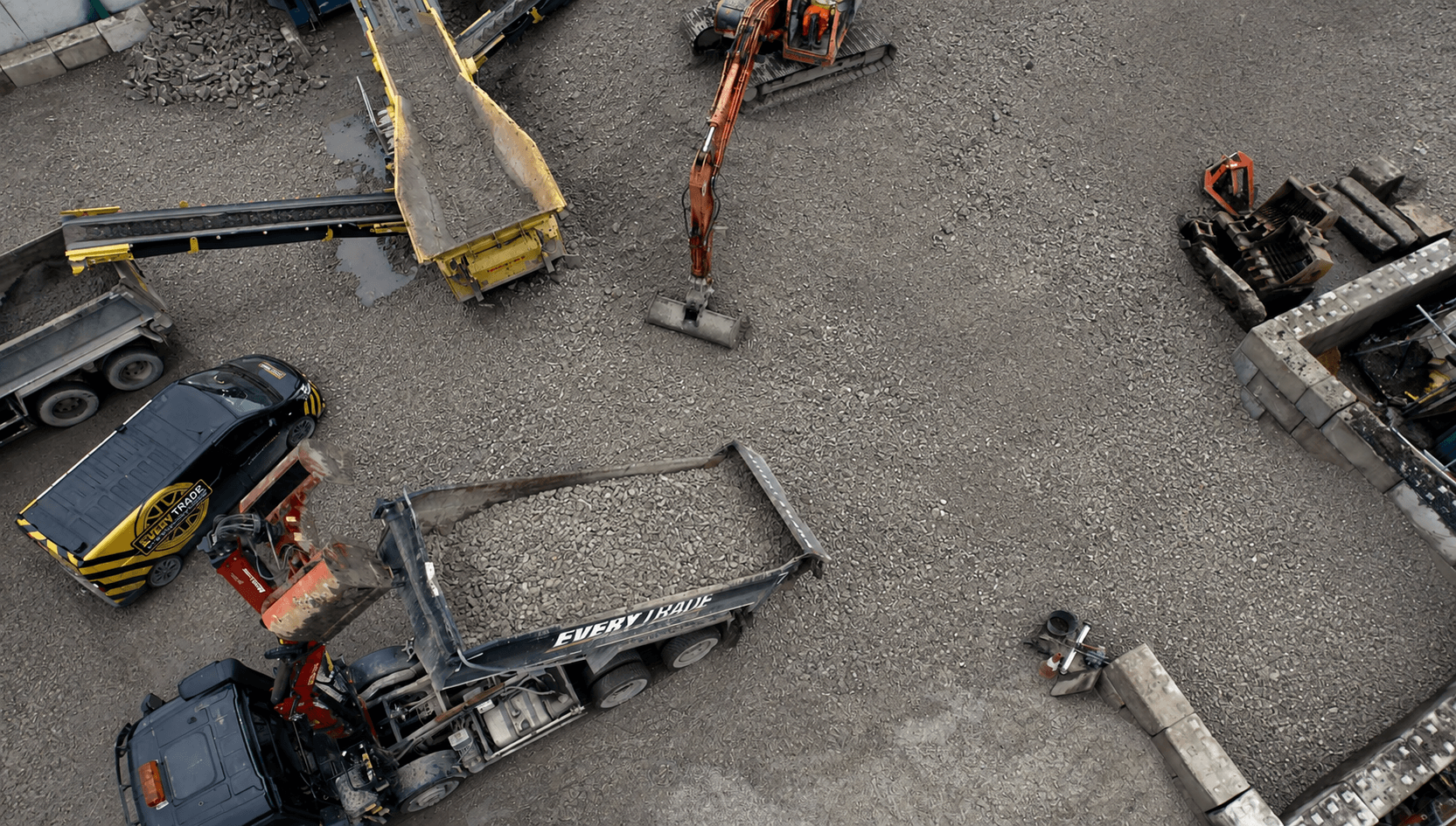
No. Ballast is a sand and gravel mix intended for making concrete, and the stone in it is rounded rather than crushed. Rounded stones roll over each other under a vibrating plate instead of locking together, so ballast will never compact into a stable layer. If you put a driveway on ballast, it will move.
The confusion is understandable, because ballast and Type 1 sit next to each other on the price list and both look like “stone with sand in it”. The difference is that one has been crushed and graded to interlock and the other has not. Use ballast for concrete and use Type 1 for sub-bases.
No, MOT type 1 is not truly permeable. This is because it contains a mix of sizes from 40mm to fine dust, which compacts down very well to a dense, solid layer which blocks water from draining through freely. This means it is not compliant with Sustainable Urban Drainage Systems (SuDS).
This is important to note because of the planning rules. In England, since October 2008, paving more than five square metres of your front garden with an impermeable surface needs planning permission, unless the run-off is directed somewhere it can soak away naturally, such as a lawn or a border. Use a permeable surface, and you do not need permission whatever the size. The full guidance is on gov.uk, and it is worth ten minutes of your time before you order anything. Policy in Wales differs, and your local authority may have its own overlay, so check with them if you are close to the line.
If permeability is what your job needs, Type 3 is the material, not Type 1.
The best sub-base for a driveway depends on what is going to drive over it. MOT Type 1 is ideal for most domestic driveways, but MOT Type 3 can also work for certain driveways. It depends a lot on the depth.
| What the surface has to carry | Compacted sub-base depth |
| Garden paths, patios, foot traffic only | 75-100mm |
| Domestic driveway, cars only | 100-150mm |
| Driveway taking vans or regular deliveries | 150-200mm |
| Commercial yards, HGV access | 250mm and up, designed by an engineer |
Two things sit on top of those figures. First, if your subgrade is soft, wet or heavy clay, add a capping layer of 6F2 underneath and a geotextile membrane between the two. Cheshire and the Mersey basin throw up a lot of clay, so this comes up often. Second, those depths are compacted depths, not the depth of the loose material you tip in. Type 1 loses roughly a fifth to a quarter of its depth when it is properly compacted, so order accordingly. We have covered how to work the quantities out in our guide to how much MOT Type 1 you need.
On surface pairings: Type 1 goes under block paving, tarmac, resin-bound and slabs. Swap to Type 3 where the drainage rules or a SuDS requirement mean the build has to be permeable. If you are still deciding on the surface itself, our guide to the best aggregate for driveways goes through the options in more detail.
How deep should MOT type 1 be?
Between 75 and 100mm compacted for paths and patios, 100 to 150mm for a domestic driveway carrying cars, and 150 to 200mm if vans or delivery lorries will use it. Commercial and HGV work needs a designed depth, usually 250mm or more.
Is MOT Type 1 the same as hardcore?
Not quite. Hardcore is a general term for any coarse fill material used to build up and stabilise ground, and it covers a wide range of quality. Type 1 is a specific graded material with a specification behind it, so it is a type of hardcore, but a lot of hardcore is not Type 1. Our hardcore aggregate guide goes into the wider category.
Can you lay MOT Type 1 in the rain?
Yes, light rain is not a problem and Type 1 actually compacts better slightly damp than bone dry. What you cannot do is compact it when it is saturated. Waterlogged material will not densify; it just moves around under the plate and pumps water up. If it has been raining hard for days, wait.
Does MOT type 1 need a membrane underneath?
Not always. On firm, well-drained ground you can lay straight onto the compacted subgrade. On clay, silt or anywhere that holds water, use a membrane. If in doubt, just use one anyway.
How long before you can build on MOT type 1?
You can build on MOT Type 1 straight away. Unlike concrete, Type 1 has nothing to cure. Once it is compacted to the depth you need and it is flat, you can start laying on it the same day.
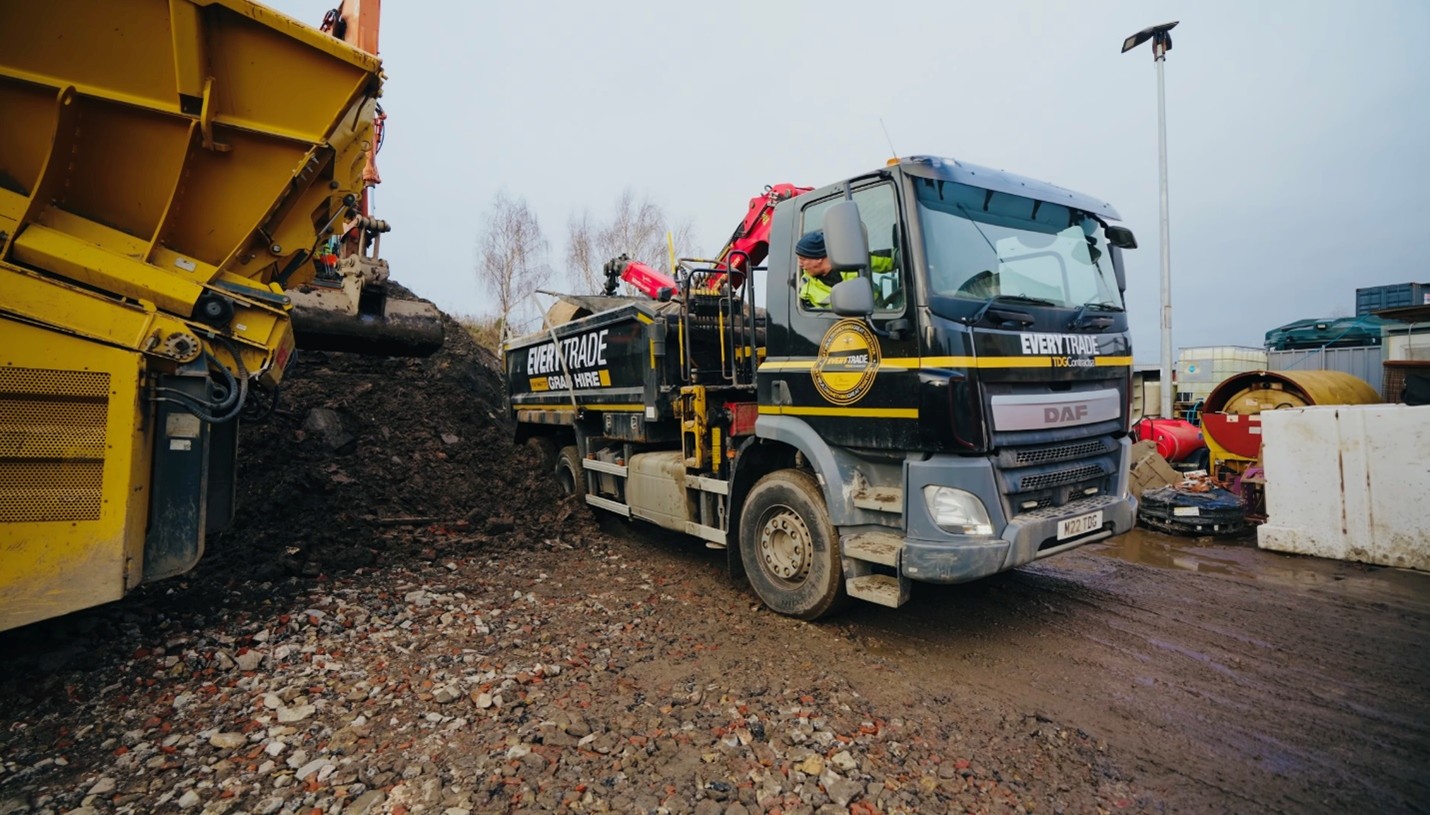
We supply both primary and recycled MOT Type 1, with same- or next-day delivery across Stockport, Manchester and Cheshire. If you are not certain which grade or how much you need, tell us the area and the depth, and we will work it out with you.
Call 0161 470 0220 or message us on WhatsApp. You can see the full range on our aggregates page, and if you need the spoil taken away as well as the stone brought in, our grab hire can do both on the same visit.