

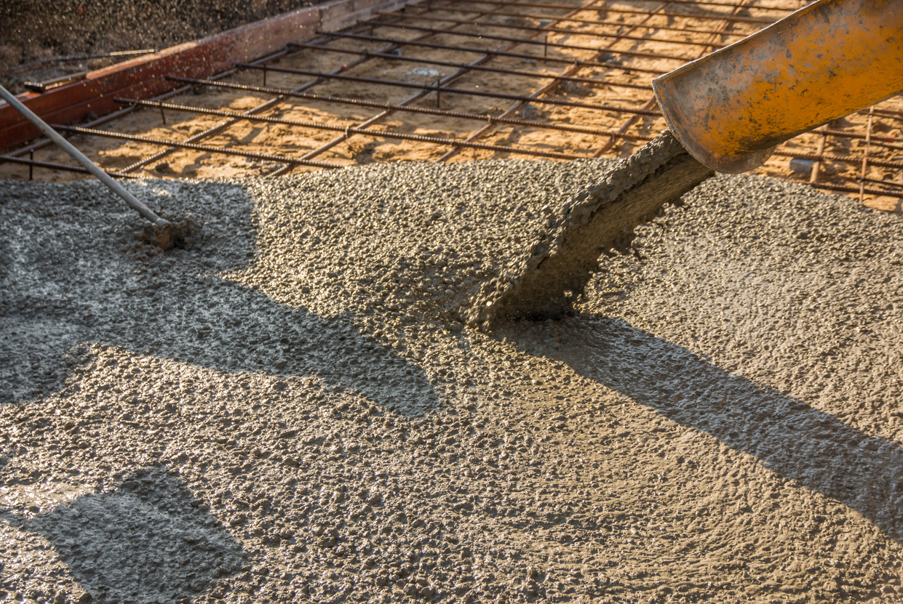
Ballast is a blend of sharp sand and gravel or crushed stone, graded from fine sand up to about 20mm, that is mixed with cement and water to make concrete. It is also called all-in aggregate. It is not the same as MOT Type 1, which is a sub-base.
If you have ever priced up a concrete job, you will have seen “ballast” on the list and perhaps wondered whether it is just another word for gravel. It is not quite that, and picking the wrong material is an expensive mistake. Here is what ballast is, what it is for, and how much to order.
Ballast is a mix of sand and stone in one load. The stone is usually gravel or crushed rock up to about 20mm, and the sand is sharp (coarse and gritty) rather than soft. Because the material is graded from fine to coarse, the small particles fill the gaps between the bigger ones. When cement and water are added, there is less empty space to fill, and the concrete sets dense and strong.
You will often see it sold as all-in ballast or all-in aggregate, because everything you need besides cement is already in the mix.
As a rough guide, ballast is around one-third sand to two-thirds coarse stone by weight. The exact split varies between sources and batches, so do not expect every delivery to look identical. If a load seems very sandy or very stony, mention it to your supplier before you start mixing.
Mainly one thing: making concrete. These are the jobs we see it used for most.
Ballast, cement and water make the concrete that goes into trench foundations. If the foundation carries a building, the mix and depth should follow your drawings or Building Control, and many people choose ready-mixed concrete for larger pours.
A concrete base for a shed is a classic ballast job, usually laid over compacted sub-base. Garage floors need a thicker slab and a stronger mix because of the loads they take.
Footings for walls, posts and piers need solid, well-compacted concrete. Ballast gives you the bulk for that without having to buy sand and stone separately.
Oversite concrete is the slab laid over prepared ground inside the footprint of a building. It normally sits on compacted hardcore and a damp-proof membrane, so check the specification before you order.
We go into more detail about the best aggregate for concrete and how to make it in this blog.
Yes, though it is a small one. Ballast is simply sand and gravel that have already been blended. Sharp sand and gravel are the same ingredients sold separately.
Buying separately lets you control the proportions, which is why some specified mixes call for it. The classic 1:2:4 mix is one part cement, two parts sharp sand and four parts gravel. Ballast saves you buying and mixing two materials. Soft building sand is a different product again. It is too fine for concrete and is used for mortar.
This is the one people mix up most. Ballast is for making concrete. MOT Type 1 is for building the layer underneath it. Learn more about MOT Type 1 and its uses here.
MOT Type 1 is crushed stone graded from 40mm down to dust that meets Clause 803 of the Specification for Highway Works. The stones are angular, so they lock together when compacted and form a firm base. Ballast is made to be mixed with cement, and the stone in it is often rounded gravel that does not compact into a stable layer on its own.
So, a typical shed base uses both: Type 1 compacted underneath, then ballast-based concrete on top. Our sub-base aggregates guide covers the sub-base side in more detail.
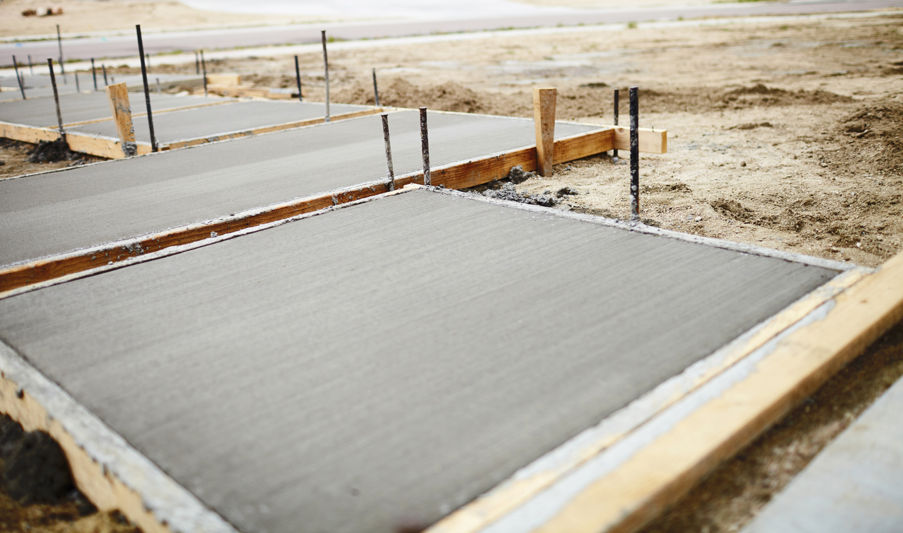

Ratios are by volume, cement to ballast. The table shows what you need for one cubic metre of finished concrete.
| Mix (cement: ballast) | Typical use | Ballast per m³ | Cement per m³ |
| 1 : 4 | Stronger slabs, driveways, workshop floors | About 2.2–2.3 tonnes | About 18 × 25kg bags |
| 1 : 5 | General purpose bases, paths, small slabs | About 2.2–2.3 tonnes | About 15 × 25kg bags |
| 1 : 6 | Light-duty work, shed bases, paths | About 2.2–2.3 tonnes | About 13 × 25kg bags |
Quantities are planning estimates and assume loose all-in ballast at about 1.75 tonnes per m³.
You will see slightly different numbers on different sites, because moisture and how loosely the ballast is piled both make a difference. These ratios are rules of thumb. If your plans specify a grade of concrete, such as GEN1 or C25, follow the specification or order ready-mix.
As a planning figure, allow roughly 2.2 to 2.3 tonnes of ballast per cubic metre of finished concrete. Put another way, one tonne of ballast makes a little under half a cubic metre of concrete.
The method is simple:
For example, a shed base 3m × 2m × 0.1m deep is 0.6m³ of concrete. At a 1:6 mix that needs about 1.4 tonnes of ballast and 8 bags of cement. With 10% extra, order around 1.5 tonnes of ballast and 9 bags. A bulk bag of ballast typically holds around 800 to 850kg, so that is roughly two bags.
Do not confuse it with railway ballast, which is a single-sized crushed stone laid under track, or the ballast used on ships. Neither is meant for concrete.
For more on choosing between materials, see our guide to the best aggregate for concrete.
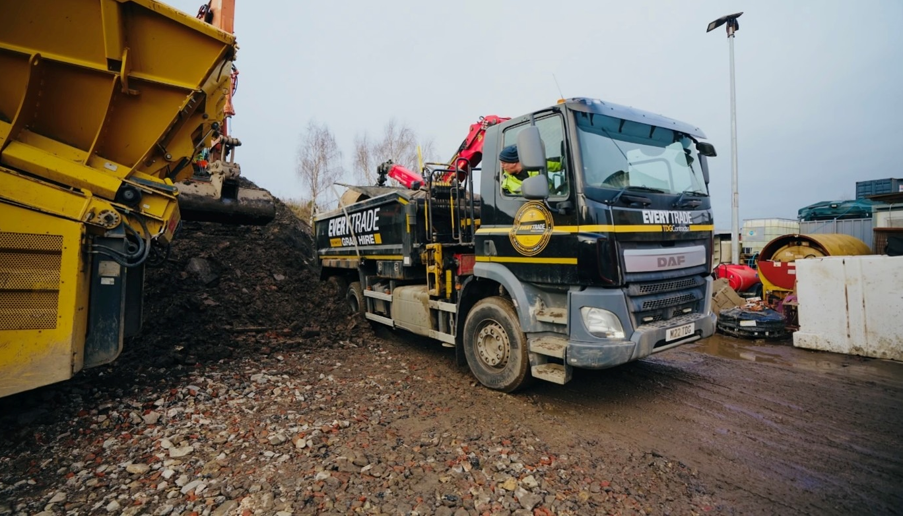
We supply ballast alongside the rest of our aggregates, delivered on our own trucks across Stockport, Manchester and Cheshire. We offer same or next day service, and we supply both the trade and the general public.
To get an accurate quote, tell us what you are building, how much concrete you need and your postcode. It also helps to mention where the load can be tipped and whether access is tight. Call us on 0161 470 0220 or book by WhatsApp or email.
Yes. Both terms describe a pre-blended mix of sand and stone for making concrete.
No. Ballast does not compact into a stable layer the way crushed, angular MOT Type 1 does. Use Type 1 for the base and ballast for the concrete.
At a 1:6 mix, roughly 5 to 6 bags of 25kg cement per tonne of ballast.
No. Sharp sand is only the fine part. Ballast includes the stone as well. Read more about sharp sand here.
Yes. Keep it off soft ground and covered, so it does not get contaminated, and it will be fine for your next job.
This guide is general information. For structural work, always follow your engineer’s or Building Control’s specification.